Москва +7 (495) 664-30-75
Санкт‑Петербург +7 (812) 938-63-79
Екатеринбург +7 (343) 328-28-77
Новосибирск +7 (383) 227-91-71
Казань +7 (843) 239-12-39
Ростов‑на‑Дону +7 (863) 226-06-99
Последние отзывы клиентов
Марина Р.
Знаток города 6 уровня
15 отзывов

Подключила услугу бота для поиска окошка на американскую визу в Казахстане. В понедельник подключила, в среду пришло уведомление о записи. Записались на середину июня. Без бота никак не могли найти даты. Спасибо! Помогли не только с ботом, но и с дополнительными вопросами по визе.

4 0
Яндекс-отзыв от 04.02.2026
Мария С.
Знаток города 6 уровня
13 отзывов

Пользовалась услугой записи ботом на собеседование на визу США. На следующий день после подключения к боту уже была запись! Отдельно отмечу вежливое общение и готовность ответить на все вопросы.

3 0
Яндекс-отзыв от 04.02.2026
Светлана А.
Знаток города 2 уровня
1 отзыв

Оформляли в Gofortravel уже четвертую визу в США. Очень довольны. Все менеджеры – профессионалы, работают четко, все грамотно объясняют, отслеживают, когда виза готова, и сообщают по почте, что можно получать.

5 0
Яндекс-отзыв от 27.01.2026
Anna T. Проверенный профиль
Знаток города 5 уровня
37 отзывов

Очень благодарна компании за помощь и поддержку на всех этапах получения визы США. Все грамотно, быстро, с понятными объяснениями. Удобно организовано проведение оплат. Бесценна помощь с записью на собеседование! Благодарю моего менеджера Юлию за уважительное и доброжелательное отношение и искреннее желание помочь! На все мои уточняющие вопросы я получала быстрый и понятный ответ! Без сомнений буду рекомендовать вас моим друзьям и знакомым!

3 0
Яндекс-отзыв от 17.01.2026
Последние вопросы и ответы
  • Avatar
    Ольга
    Посетитель сайта
    Добрый день. Скажите, пожалуйста, как я могу записаться на прием в Тбилиси? Моя дочь 4 года, американка, я россиянка. Как мне записаться в Child Support Service? Мне нужно решить некоторые...
    Avatar
    Максим
    Проверенный профиль
    32 ответа на сайте
    Добрый день. Если вас интересует запись в посольство США в Тбилиси по вопросам продления американского паспорта для вашей дочери, а также по другим личным невизовым вопросам, связанным с американским гражданством ребенка, с этим мы помогаем.Вы можете написать напрямую в посольство США в Тбилиси – их официальные контакты есть на официальном сайте. Если же вам требуется помощь с назначением даты в...
  • Avatar
    Даниил
    Посетитель сайта
    Добрый день! 3,5 года назад проходили интервью на B1/B2 в Праге. Админпроверка. На днях пришло письмо с приглашением на повторное интервью. Вопрос: назначенные посольства в Варшаве и Астане – только...
    Avatar
    Екатерина
    Проверенный профиль
    900 ответов на сайте
    Добрый день, Даниил! Все верно. Правила подачи заявлений в посольствах США в Варшаве и Астане касаются новых заявителей – граждан России, которые не имеют вида на жительство в других странах и постоянно проживают на территории России.Поскольку вы проходили собеседование в Праге до введения этих правил и по вашему делу была назначена административная проверка, ваше дело остается в посольстве США в...
  • Avatar
    Надя
    Посетитель сайта
    Здравствуйте! Хочу обратиться за советом. Хотим слетать в NY вдвоем с мужем дней на 10. У меня есть активное ИП, недвижимость, автомобиль, деньги на счету и большой опыт в путешествиях...
    Avatar
    Андрей
    Проверенный профиль
    498 ответов на сайте
    Добрый день! На одобрение туристической визы влияют следующие факторы: ваши прошлые поездки за границу, какие именно страны и как часто вы посещали, а также прочные связи с родиной – стабильная работа и хороший доход. Поездка в Нью-Йорк – довольно затратное путешествие, поэтому нужно будет показать офицеру свою благонадежность как состоятельных туристов.Если за последние пять лет вы много путешествовали вместе с...
  • Avatar
    Kirill
    Посетитель сайта
    Здравствуйте! Вопрос: виза США – это же чисто право на въезд, верно? Вопрос связан с тем, что я прилечу до конца визы, а выехать планирую после. Как я понял, дату...
    Avatar
    Елена
    Проверенный профиль
    163 ответа на сайте
    Добрый день, Кирилл! Наличие визы даёт вам право прибыть в пункт пропуска на границе США с целью въезда на территорию страны. Въехать можно в любой день в течение срока действия визы – он указан в визовом стикере в паспорте.При этом окончательное решение о допуске в страну и сроке пребывания принимает сотрудник иммиграционной службы непосредственно в пункте пропуска. Для граждан России...
  • Avatar
    Alex
    Посетитель сайта
    Здравствуйте, скажите, пожалуйста, сколько будет стоить записать 4 человек с ботом в Астану для США (нужна только услуга бота), у нас 3 аккаунта: 2 человека – родители жены, моя мама...
    Avatar
    Екатерина
    Проверенный профиль
    900 ответов на сайте
    Добрый день! Актуальную стоимость услуги бота для записи в Посольство США в Астане вы можете посмотреть в таблице вверху этой страницы.Также, пожалуйста, обратите внимание: если у вас 3 разных личных кабинета, то с высокой долей вероятности запись на собеседование будет на разные дни и разное время. Если для вас принципиально пройти интервью в один день и в одно время, в...

U.S. Embassy Visa Interview Questions (2026)

Rating 4,92 (2 240 votes)
Views: 191 047
Comments: 0
Updated: 21.11.2026
New U.S. Visa Application Rules
New U.S. visa application rules

Since 6 September 2025, Russian citizens can apply for a U.S. visa only through the U.S. Embassy in Astana and the U.S. Embassy in Warsaw. Applying in another country is permitted only if you hold citizenship or a residence permit in that country. For detailed information about the new U.S. visa application rules, follow this link.

What Should You Know Before a U.S. Embassy Interview?

Many future travellers are concerned about the questions asked at a U.S. visa interview in 2026. This is understandable. The interview at the U.S. Embassy is considered the final and most important stage of obtaining a U.S. visa. A positive outcome depends on answering the officer’s questions appropriately. Although the U.S. visa interview procedure is clearly regulated and described in detail on our company’s website, the conversation with the American officer can unfold differently each time. Embassy staff pay close attention to more than just the applicant’s answers. Their behaviour also matters greatly. The course of the interview may change depending on the situation. Its outcome can therefore never be predicted with complete certainty.

However, you should not worry excessively. It is important to approach the interview with the right mindset and behave naturally, in a friendly and calm manner. Do not show your nervousness. Listen to the officer and provide the answers required. The questions most frequently asked by U.S. Embassy staff can be divided into several groups, described in detail below. When applying for a U.S. visa, preparing for the interview in advance is very important. The interview should not involve improvisation. Your account of your circumstances for the U.S. Embassy should be logical and consistent. Once an applicant becomes confused or contradicts themselves, the likelihood of a visa refusal increases significantly. To avoid this, read the information about common U.S. visa interview questions carefully.

Questions a Visa Officer May Ask at a U.S. Visa Interview

Top 25 U.S. Embassy B1/B2 visa interview questions (2026)
1. What is the purpose of your trip to the United States? Why did you decide to visit the United States in particular?
2. When and for how long would you like to travel to the United States? Why these dates? Who are you travelling with?
3. What exactly will you do in the United States? Which cities do you plan to visit?
4. Who will pay for your trip? Where do you plan to stay?
5. How well do you speak English? (The officer may start speaking English.)
6. Tell us about your itinerary. How will you travel around America?
7. Why do you want to visit these particular cities? What will you do in each city?
8. What would you most like to see or visit in the United States? Why these particular places?
9. Why are you travelling alone? Who do you usually travel with?
10. How much do you expect your trip to cost? Who is paying for it?
11. Have you been to the United States before? What did you do? Which cities did you visit? Where did you stay?
12. Which countries have you visited over the past few years? Where did you travel most recently?
13. Who do you usually travel with? Why are you not travelling together this time?
14. Have you been refused a U.S. visa or a visa to a European country? Why were you refused?
15. Where do you work? What does your company do? Where is it located?
16. What is your job title, and what are your responsibilities?
17. Who are your main clients, partners or suppliers?
18. Are you married? Do you have children? How old are they?
19. What does your husband or wife do? What is their position and field of work?
20. Why are your husband, wife or children not travelling with you? Who will look after the children?
21. Why are you not married yet? Do you have a boyfriend or girlfriend?
22. Do you have friends, relatives or acquaintances in the United States? Who do you know there?
23. How is John related to you? How often does he visit Russia? When did you last see each other?
24. What is his status in the United States? What does he do in America? How long has he been in the United States?
25. What has changed since your last U.S. visa refusal? Why did you decide to apply again?
We pay particular attention to preparing our clients for the interview. It is very important to be prepared to speak with the visa officer both in terms of your documents and mentally. The visa decision depends entirely on how you answer the U.S. Embassy officer's questions. You can find more information about Embassy interview questions by following the link.

Common U.S. Embassy interview questions in English

USA B1/B2 Visa Interview – Top 25 questions (2026)
1. Why are you traveling to the USA? Why did you choose this country?
2. When are you going to the USA and for how long? Why did you choose to travel at this time? Who else is traveling with you?
3. What are you going to do in the USA? Which cities would you like to visit?
4. Who will finance your trip? Where will you stay?
5. How good is your English? (the officer can speak English at this moment)
6. What is your itinerary? How are you going to move from one place to another in the USA?
7. Why would you like to visit all these places? What are you going to do there?
8. What is your favorite place in the USA? Why are going to visit it?
9. Why are you traveling alone? Do you always travel alone or with someone else?
10. How much do you think it will cost to visit the USA? Who is going to finance it?
11. Have you ever been to the USA before? Where did you stay? What places did you visit?
12. Have you traveled to other countries in the previous years? What was your last trip?
13. With whom do you usually travel? Why are you not going together to the USA?
14. Have you been refused a visa in the USA or the European countries? What was the reason?
15. What do you do for a living? In what sphere do you work? Where is your company located?
16. What is your job position and duties?
17. Who are your key clients, partners, suppliers?
18. Are you married or single? Do you have children? How old are they?
19. What is the job position of your husband / wife?
20. Why are you traveling without your husband / wife / children? Who will look after your children?
21. Why are you not married yet? Are you dating anyone?
22. Do you have friends or relatives in the USA? Do you have any other contacts in the USA?
23. Who is John to you? How often does he visit you in Russia? When did you see him last?
24. What is his status in the USA? What does he do for a living? How long has he been living in the USA?
25. What changes do you have after the US visa refusal? Why are you applying again?
To obtain a U.S. visa, Russian citizens must travel abroad. Russian-speaking officers are not available to Russian applicants in every country. Many U.S. embassies conduct interviews in English. Above is a sample list of the main interview questions. They are presented in English to help you understand how questions will be asked and what they will cover. Before booking an appointment at a U.S. Embassy that conducts interviews only in English, try to assess your language level objectively. Remember that a language barrier is a real reason for a U.S. visa refusal. You will need to hold a conversation with the officer and give detailed answers, rather than one-word responses. We hope the English questions below will help you prepare for your interview.

1. Questions about your trip to the United States. The main questions on the day of your U.S. Embassy interview always concern the applicant’s travel plans. You may be asked where you are going and why, how many days you intend to spend in each place, where you will stay, how you will travel between cities, and what you most want to visit and see. You can mention museums, exhibitions, cultural events or simply tourist attractions. Remember that no reservations are required. You do not need to buy or reserve tickets in advance. The main thing is to be able to answer the visa officer’s questions about your forthcoming trip in detail. It is very important for the officer to see that you are preparing for your journey to the United States and have a clear understanding of where you are going and why.

2. Questions about your travel companions. At a U.S. Embassy interview, applicants are often asked who will accompany them to the United States. If you are travelling alone, the visa officer may ask who you usually travel with and why you are going to the United States on your own this time. Solo travellers invariably attract more questions. Embassy staff tend to view them with greater suspicion. Do not worry, however: this does not mean that everyone travelling alone is refused a visa. Simply prepare an explanation. For example, none of your family or friends has leave on your travel dates. If you are travelling with friends, you may be asked how you know them and whether you have travelled abroad together before, how many times they have visited the United States, how long they spent there, and so on.

3. Questions about the people you are visiting. Applicants interviewing for a U.S. visitor visa are often asked about their hosts. Embassy staff will want to know your relationship to the people inviting you, how often you see them, their immigration status in the United States, how they moved there, what they do and where they work. If you are visiting friends, you may be asked how you met. Of course, you are not expected to know every detail of your friends’ or relatives’ lives, or every circumstance of their move. These questions may nevertheless be asked because embassy staff need to establish that you actually know the people expecting you, rather than having simply obtained an invitation from strangers.

If your trip is for business and you are being sent to the United States for work, the visa officer may ask what the host company does, how long you have worked with it and whom you communicate with at the American organisation. They also often ask why you, rather than another employee of your company, are travelling. When you apply for a U.S. business visa, the officer may ask about your English proficiency. If your language skills are limited, you may be asked how you intend to communicate and negotiate in the United States and whether an interpreter will be provided. Both options are acceptable to the Embassy: speaking the language yourself or using an interpreter. It is important to have a plan and explain how you are preparing for your trip to America.

4. Questions about your trip’s sponsor. If the applicant is not paying for the trip themselves, this information must be included in the relevant section of the online DS‑160 application in 2026. In this case, be prepared on the day of the interview for questions about who is paying for your trip to the United States and why. This is particularly relevant if the visit is sponsored by people who are not relatives or by an organisation. If a company is covering the costs, the officer may not only ask questions but also request documents confirming payment. You should therefore be prepared to support your answers with documents at the U.S. Embassy. Bring an employment letter detailing all financial guarantees, or an invitation from your U.S. partners confirming that they will cover the expenses.

5. Questions about acquaintances in the United States. Even if you do not know anyone in the United States and have stated in your application that you will stay at a hotel, you may still be asked whether you have friends or acquaintances there. If you have distant acquaintances in the United States whom you are not primarily travelling to visit, it is generally recommended not to volunteer this information at the interview. Otherwise, it will prompt additional questions from the visa officer that you may not be able to answer. It may also appear suspicious: why did you not state in your application that you have contacts in the United States? You should mention acquaintances in America when they are genuinely close friends whom you intend to stay with on this or future trips. In that case, answering the questions will not be difficult.

6. Questions about the applicant’s employment. If you work, be prepared to explain your role and responsibilities in detail at the interview. You may be asked about your company’s activities, clients and partners. Sometimes officers ask where your organisation is located and how you get to work. A U.S. visa officer may also ask you to name key employees and even provide their telephone numbers. Employment questions at a U.S. visa interview can vary widely, but all are intended to check whether the employment letter provided is truthful. Unfortunately, documents confirming applicants’ employment do not always reflect reality. Embassy staff therefore have to ask about work in such detail.

If the applicant is not currently employed, the visa officer may be interested in their previous employment. Even if you do not have a permanent job at the time of the interview, it is still advisable to show the U.S. Embassy officer that you are occupied rather than simply doing nothing. You might explain that you look after children or grandchildren, manage the household or work on your garden plot. The most appropriate answer depends entirely on the applicant’s circumstances. Saying that you do nothing at all is not the best approach to obtaining a U.S. visa. This relates to the suspicion of potential immigration: officers view all applicants in this way, and you need to demonstrate that you have commitments in Russia.

7. Questions about the applicant’s studies. If a U.S. visa application is submitted for a student, it is advisable to prepare detailed answers about their studies and educational institution. Questions can vary widely. Officers usually ask where the applicant studies, which school year or university year they are in, what subjects they take and when they expect to graduate. Questions about plans after completing the course are also common: where they intend to continue studying or work. Officers may ask more specifically whether the applicant has a particular company in mind for starting their career, although these questions are mainly addressed to final-year students. Sometimes U.S. Embassy staff ask which subjects the applicant likes most and whether they would like to study abroad.

8. Questions about relatives. The U.S. Embassy is primarily interested in whether you have relatives in America. If you do, officers ask about their status, when they moved to the United States and which immigration programme they used. The visa officer may request documents confirming their immigration status and an invitation. At the embassy interview, you may also be asked who remains in Russia: whether you are married, whether you have children, their ages and why they are not travelling with you. If an applicant is married but travelling without their spouse, detailed questions about the spouse’s employment are common. Why are you not travelling together: do your holiday schedules differ, or do you generally not travel together? You should prepare for these questions.

9. Questions about previous visits to the United States. If you have visited the United States before, the visa officer may ask about previous trips, regardless of how long ago they took place. Questions may cover the dates and duration of visits, exactly where you went and why, where you stayed and what you visited. Questions about previous U.S. trips can be very detailed if the applicant visited frequently, stayed for a long time or received medical treatment in America, including giving birth. In the last case, the U.S. Embassy officer may ask to see documents confirming that hospital bills were paid in full. Remember that another visa cannot be obtained without paying all medical expenses incurred in the United States. This is a mandatory immigration service requirement.

10. Questions about international travel. It is well known that travel and visa history plays an important role for the U.S. Embassy in 2026. Someone who travels abroad frequently inspires more confidence than an applicant with a blank passport. A lack of international travel is very often the reason for a U.S. visa refusal. Only certain visits to friends or relatives and business trips are exceptions. You should therefore always bring old international passports to your interview to demonstrate your travel history. The American officer may simply look through your passports or ask about your international trips. Questions may also arise if the passports contain visa refusals from other countries or stamps indicating deportations or breaches of foreign visa rules.

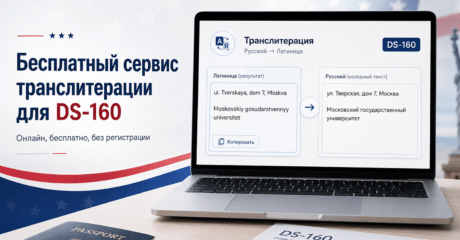
11. Questions about the DS‑160 application. Sometimes the visa officer at the U.S. Embassy has questions about the completed application. In most cases, this concerns people who applied independently and did not carefully study the U.S. Embassy’s application form instructions. The officer may then need to ask several questions during the interview to clarify particular points. Bear in mind that serious mistakes and typing errors lead to misunderstandings that cannot always be resolved quickly. This usually relates to the DS‑160 being completed in English. We therefore recommend completing the electronic application very carefully, following the current U.S. Department of State transliteration rules available on our website at the link. If the DS‑160 is completed correctly, there should be no questions about it.

12. Questions about English language skills. U.S. Embassy staff sometimes ask how well an applicant speaks English. This is particularly relevant if their university specialisation or current work implies English proficiency. They may even speak to you in English to check your actual level. However, this remains relatively uncommon in 2026. Usually, when asked about language skills, it is sufficient to say that you speak English at a basic level suitable for tourism. It is advisable to be modest and avoid drawing unnecessary attention to your abilities. From the American officers’ perspective, the better someone speaks English, the easier it would be for them to remain in the United States.

13. Seemingly unrelated questions. Sometimes an officer asks questions at the interview that appear unrelated to the visa application. This is not a joke but a well-known feature of U.S. Embassy interviews. You may be asked about the weather, how you travelled to the Embassy or other apparently unrelated matters. It may seem that everything is going well, a positive decision has been made and the officer simply wants to chat. However, this is not necessarily the case, so you should remain attentive. U.S. Embassy staff are skilled and experienced psychologists, and every question is asked for a particular reason. Whatever you are asked, remember that you are still at an interview and that the visa decision depends entirely on your answers.

Preparing for a Visa Interview at the U.S. Embassy

To conclude, we would like to point out that U.S. Embassy staff continually conduct large numbers of interviews. Imagine how many applicants pass through the consular section. Visa officers have enormous experience and therefore quickly identify inconsistencies and contradictions in applicants’ answers. Applicants should think through detailed answers to all possible questions in advance. The main objective at a U.S. Embassy interview is to come across as an open, friendly person who is ready to explain every aspect of their circumstances and answer any question, because their intentions are clear and they have absolutely nothing to hide. If you approach the interview properly, you can expect a positive outcome even with weak supporting documents.

When you apply through our company, you can count on detailed interview guidance. Having worked with U.S. visas since 2010, we know the questions American officers ask applicants for different visa categories. Depending on your circumstances, we will explain how to communicate appropriately with the embassy officer and discuss potentially difficult questions. You will know what to say to the consular officer and how to answer in different situations, when to offer documents for inspection and when not to rush to do so. Our specialists will help you prepare thoroughly for your visit to the U.S. Embassy. Like you, we have an interest in your success, because our services are paid for only if our joint work achieves a positive outcome!

LATEST NEWS

    Ask a question

    For a more accurate and useful answer, describe your situation in detail and include as much relevant information as possible. The more information you provide, the easier it is to give a specific answer to your question. Before posting, please read the question posting rules, as we do not publish questions that do not meet these requirements.